Military History
ALL WORLD WARS
n
NEW ARRIVALS
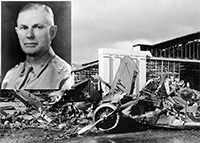
Walter Short - Was He the Army's Scapegoat For a Disaster? by David L. Richey
Romanian and German Troops in Bessarabia, Ukraine and Crimea, 1941-42Romanian and German Troops in Bessarabia, Ukraine and Crimea, 1941-42"For the imperfections of the present volume I can only plead that I hope it may prove to be a first edition, and that further studies and the publication of more detailed information may enable me at some future time to complete, or at least to elaborate, the biography of a great man in whom the whole world is interested.The modest and retiring life which Admiral Togo has hitherto lived has made it difficult for the biographer to collect many picturesque incidents relating to his early years. But modesty is one of the greatest of virtues, and that he has always exhibited this virtue in so conspicuous a manner seems to be one of the elements which make the greatness of his character." >>More
Atlas of the Fortresses of the Russian Empire, 1837
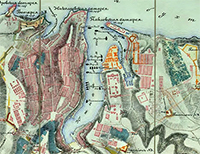
A unique handwritten atlas of all the fortresses of the Russian Empire. Without a grid of geographic coordinates. The cardinal directions are marked with an arrow. The maps are colored with watercolor, mounted on batiste fabric, and placed in individual folders. The provenance of the copy, attributing it to Emperor Nicholas I, is established through a combination of identifying features. >>More
Przemysl by Victor Yakovlev
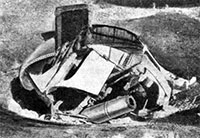
"The onset of spring in the current war period on our southwestern front was marked by the fall of the first-class Austrian fortress of Przemyśl. This event, of great moral and strategic significance, overshadowed all other military events, drawing worldwide attention and prompting extensive discussions on the pages of both domestic and foreign newspapers and journals, filled with reports from correspondents who managed to visit this fortress. Unfortunately, almost all descriptions and correspondents' reports have been fragmented and fail to provide a comprehensive picture of the fortress's layout and the conditions of the struggle for it. Although they do offer interesting material from a technical and fortification standpoint—primarily through photographic images—they present it unsystematically and in language better suited for laymen rather than technicians and specialists in military engineering.">>More
The Flight of the Goeben and the ‘Breslau by Admiral Sir Berkeley Milne
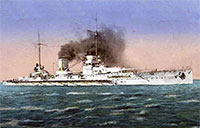
"AFTER the publication in March 1920, of the “Official History of the War: Naval Operations, Vol. I.,” by Sir Julian S. Corbett, I represented to the First Lord of the Admiralty that the book contained serious inaccuracies, and made a formal request that the Admiralty should take action in the matter. As the Admiralty did not think proper to accede to my request, I have thought it right to publish the following narrative." >>More
Five Years in Turkey by Liman von Sanders
Romanian and German Troops in Bessarabia, Ukraine and Crimea, 1941-42Romanian and German Troops in Bessarabia, Ukraine and Crimea, 1941-42"The following notes were made during my involuntary stay at Malta. On returning home I supplemented them from my records. The five years of my service in Turkey were years of struggle, not only against the World War enemies, but against those who never ceased in their efforts to minimize the influence of the German military mission. I hereby express my thanks to my German and Turkish comrades who faithfully stood by me in those trying days." >>More
War 1904-1905. From the Diary of an Artist by Nikolai Samokish
Romanian and German Troops in Bessarabia, Ukraine and Crimea, 1941-42Romanian and German Troops in Bessarabia, Ukraine and Crimea, 1941-42Here I provide text excerpts from my diary and sketches from my trip to the Far East and my seven-month stay with the active army. I beg the reader not to regard this text as a literary work; it is merely an explanation for the sketches, allowing a connection between various studies, sketches, and compositions on military themes that I created at the locations of our troops. >>More
The Effects of Infectious Disease on Napoleon's Russian Campaign by B. Allen
"This paper will discuss the effects of infectious disease on Napoleon’s forces during the Russian campaign of 1812. In short, it will argue that the primary reason Napoleon failed to defeat the Russian army was because his forces were decimated by disease, specifically typhus, dysentery, and diphtheria. It will also demonstrate the effect of disease and illness on Napoleon’s judgement and decision-making process." >>More
Warsaw Uprising - Interrogation of General Lieutenat Reiner Stahel
On July 27, 1944, as the head of "Stahel's Sonderstab," I was awarded the Knight's Cross with Oak Leaves by the Fuhrer. Under these circumstances, he appointed me as the commandant of Warsaw and assigned me the following tasks: a) maintain order and peace in the city; b) assist in constructing fortifications." >>More
Schlieffen Plan By Peter Kauffner
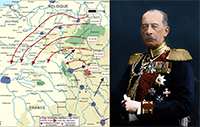
The Schlieffen Plan was a German plan to invade France through Belgium that was developed by the General Staff, the Army’s planning division, in December 1905. A modified version of the plan was used when World War I broke out in August 1914. It is often claimed that the plan was Germany’s response to the threat of a two-front war. Yet Schlieffen’s own writing shows that this was not his motivation. The plan is better explained as an example of “cult of the offensive,” an approach to military planning that was popular in various nations at this time. >>More
Psychology of Intelligence Analysis by Richards J. Heuer, Jr.
Romanian and German Troops in Bessarabia, Ukraine and Crimea, 1941-42Romanian and German Troops in Bessarabia, Ukraine and Crimea, 1941-42"This volume pulls together and republishes, with some editing, updating, and additions, articles written during 1978-86 for internal use within the CIA Directorate of Intelligence. Four of the articles also appeared in the Intelligence Community journal Studies in Intelligence during that time frame. The information is relatively timeless and still relevant to the never-ending quest for better analysis." >>More
Interrogation of Wilhelm Keitel, Mondorf Resort, Luxembourg, June 1945
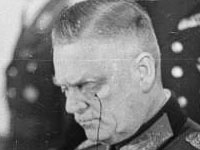
In June 1945, Soviet representatives interrogated General Field Marshal Wilhelm Keitel in Luxembourg. Keitel spoke on preparation for war with USSR, strategical and operational plans of war, long-term work with Hitler, opinion on Hitler's leadership qualities, Werewolf, Vlasov, Himmler and Goebels. He also provided extensive summary of the military campaign in the East. >>More
German Ships of Jutland Photographic, Postcards and Paintings 1916
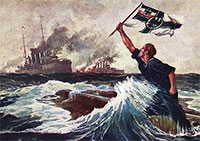
Collection of German photographic postcards and paintings of the Kaiser High Seas fleet before WWI and in the battle of Jutland, May 31, 1916 - June 1, 1916. >>More
The "Henge" at Ludwikowice, Poland – Test Rig for the Nazi-Bell?
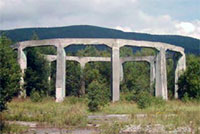
"In 2001, a new book titled "The Hunt for Zero Gravity" written by noted British author Nick Cook was released. Soon it turned into a bestseller because it proved to be a very successful and entertaining mixture of an investigational report about specific Black Projects, weird technological and scientific background information, and - of course - it all linked up with rumors and hearsay reaching back to Nazi Germany and their widely 'known' Wunderwaffen... In his book, Cook described how he visited the site in Poland and even provided pictures showing the location. In August 2005, I was stationed with an Air Force unit north of Berlin and an hour's drive from the German-Polish border and decided to make that 600 km trip to see what I could find out. Due to the detailed description in Cook's book, I was able to find the place myself. My report is below.." >>More
Interrogation of Hermann Goering, Mondorf Resort, Luxembourg, June 1945
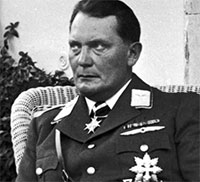
In June 1945, Soviet representatives had a chance to interrogate Goering. Goering shared his opinion on the military plans of the war against Soviets, role in the Party, relationship with Hitler, Goering's downfall, Bormann's intrigues, his views on Hitler, Himmler, Goebbels, Werewolf perspectives, the conspiracy of June 20, 1944, faith of the Gauleiters, ethnic cleansings, Thalmann and Vlasov. >>More
Net Reconstruction - A Basic Step in Traffic Analysis by Seaburne Report
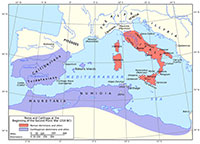
Net Reconstruction - A Basic Step in Traffic Analysis by Seabourne ReportThis is an explanation, for those unfamiliar with the subject, of the nature of net reconstruction of the communications and the techniques usually used to accomplish it.Communications intelligence is possible because any organization, particularly a military organization in battle, must carry on rapid communications to achieve planned, coordinated, and effective action. Often, radio is used, but because radio is susceptible to interception, disguises become necessary to conceal the content of the message traffic and the organization's structure. >>More
About Hitler's Fate and his Role in the Last Fight for Berlin
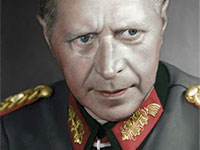
On April 23, 1945, Hitler appointed the General of Artillery Helmuth Weidling to command of the Berlin Defense. Weidling tried to organize the city’s defense against overwhelming odds, but eventually lost the battle for Berlin. On May 2, 1945, he signed the capitulation of the German troops and surrendered with the remnants of the Berlin’s garrison. During his interrogation, in December 1945, Weidling was suggested to write his thoughts about Hitler’s fate and Fuhrer’s role in the fight for Berlin. >>More
Marine Paintings by Ivan Aivazovsky
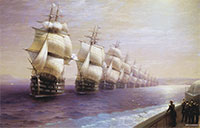
Romanian and German Troops in Bessarabia, Ukraine and Crimea, 1941-42Romanian and German Troops in Bessarabia, Ukraine and Crimea, 1941-42Russian painter, master of the sea landscape Ivan Konstantinovich Aivazovsky was born July 29 (July 17 in old style) 1817 in Feodosiya (Crimea). He was the son of an Armenian merchant Ayvazyan (Gayvazovsky) and was baptized under the name of Hovhannes (Armenian form of the name "John"). Since childhood, Aivazovsky painted and played the violin. Thanks to the patronage of the senator Alexander Kaznacheev, the governor of the Tauria (Crimea) province, he was able to study at the Tauride Gymnasium in Simferopol, and then at the Academy of Fine Arts in St. Petersburg, where he attended the classes of landscape painting of Professor Maxim Vorobyov and the battle painting of Professor Alexander Sauerweid. >>More
Album of the Mannerheim Line Fortifications 1938
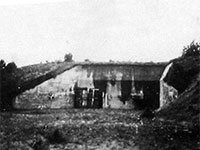
"This album was compiled by the Soviet military intelligence in 1938 and issued to the Soviet Army High Command. Kirill Meretzkov (Leningrad Military District Commander in 1939-40). “For example, we have the Album of Enemy’s Fortified Positions and it was the most valuable source we used for the operational planning. I always kept it on my table, on the left side.” (Original was found in the Leningrad Military District archive)." >>More
Mutiny on Storozhevoy
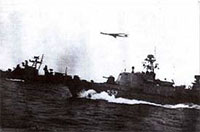
Romanian and German Troops in Bessarabia, Ukraine and Crimea, 1941-42Romanian and German Troops in Bessarabia, Ukraine and Crimea, 1941-42"In November 1975, a group of sailors led by the ship's political officer took over the Soviet "Krivak" class destroyer "Storozhevoy" and attempted to sail to Sweden to seek asylum. They were attacked and turned back by Soviet naval and air units. Information of this dramatic event which has never been acknowledged by the Soviets, made it to the West only piece by piece. It was the intent of this study to assemble all available data for critical analysis to determine potential causes and implications." >>More
Red Army in 1937: Soviet Propaganda Album
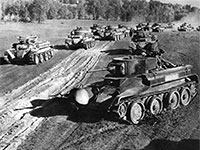
Romanian and German Troops in Bessarabia, Ukraine and Crimea, 1941-42Romanian and German Troops in Bessarabia, Ukraine and Crimea, 1941-42Red Army Official Photo Album, published by the 20th anniversary of the Russian Revolution. >>More
Operation Crossroads
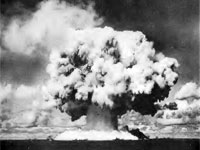
Romanian and German Troops in Bessarabia, Ukraine and Crimea, 1941-42Romanian and German Troops in Bessarabia, Ukraine and Crimea, 1941-42"This pictorial record of Operation CROSSROADS must be dedicated to the 42,000 men—civilians and servicemen, who made the gigantic experiment possible. It is the record of a job well done. It is a record which makes' impressively clear the extent of the preparations made over a period of months. The variety of activities constituting Joint Task Force ONE is also evident. The Operation called for a multitude of skills and talents. And from every man it demanded hard work. All this is apparent from the record. For obvious reasons these photographs no more than hint at the tremendous amount of data obtained concerning the effect of the bombs upon ships and material. They necessarily slight the technical and scientific lessons learned at Bikini. They do, however, evidence an incontestable truth. The Atomic Age is here. It is no myth. Nor is the atomic bomb "just another weapon." It is the most lethal destructive agent yet devised by man. Its energy release is staggering; its radioactivity is slow-killing poison." >>More
Sun Tzu on the Art of War
Romanian and German Troops in Bessarabia, Ukraine and Crimea, 1941-42Romanian and German Troops in Bessarabia, Ukraine and Crimea, 1941-42"Sun Tzu said: The art of war is of vital importance to the State. It is a matter of life and death, a road either to safety or to ruin. Hence it is a subject of inquiry which can on no account be neglected. The art of war, then, is governed by five constant factors, to be taken into account in one's deliberations, when seeking to determine the conditions obtaining in the field. These are: (1) The Moral Law; (2) Heaven; (3) Earth; (4) The Commander; (5) Method and discipline. The MORAL LAW causes the people to be in complete accord with their ruler, so that they will follow him regardless of their lives, undismayed by any danger. HEAVEN signifies night and day, cold and heat, times and seasons. EARTH comprises distances, great and small; danger and security; open ground and narrow passes; the chances of life and death. The COMMANDER stands for the virtues of wisdom, sincerely, benevolence, courage and strictness. By METHOD AND DISCIPLINE are to be understood the marshaling of the army in its proper subdivisions, the graduations of rank among the officers, the maintenance of roads by which supplies may reach the army, and the control of military expenditure. These five heads should be familiar to every general: he who knows them will be victorious; he who knows them not will fail…' >>More
Flight MH17 Destruction on 07.17.14 near Donetsk, Analysis by Almaz-Antey
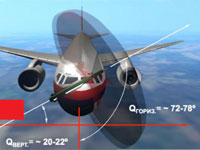
Romanian and German Troops in Bessarabia, Ukraine and Crimea, 1941-42Romanian and German Troops in Bessarabia, Ukraine and Crimea, 1941-42Co-pilot of the Malaysian Boeing 777-200, shot down over Eastern Ukraine on July 17, 2014 could notice the approaching anti-aircraft missile launched from "Buk-M1" self-propelled launcher at the last moment before it exploded near the nose of the aircraft, and the right side of the cockpit was literally cut off from the fuselage. Such conclusions can be drawn from the full version of the presentation by "Almaz-Antey", leading Russian defense contractor, which took part in SAM BUK (SA-11) development during the late 1970s and 1980s. Full version of the presentation, shown at the "Almaz-Antey" briefing on June 2, 2015 consists of 53 slides (some showed only the titles of the presentation sections and were skipped in this translation- AWW) and was divided into three parts. This document contains damage analysis of the airplane and simulation of the 9M38M1 missile approach to its target, as well as photographs, charts, initial data, 3D graphic models and other information. >>More
CHK-GPU-NKVD-KGB Propaganda Posters

Romanian and German Troops in Bessarabia, Ukraine and Crimea, 1941-42Romanian and German Troops in Bessarabia, Ukraine and Crimea, 1941-42"CHK-GPU-NKVD-KGB Propaganda Posters". >>More
Ultra and The Myth of the National Redoubt by Marvin L. Meek
Romanian and German Troops in Bessarabia, Ukraine and Crimea, 1941-42Romanian and German Troops in Bessarabia, Ukraine and Crimea, 1941-42"This study investigates the creation of a mythical fortifications system called the German "National Redoubt" and the use of ULTRA to confirm its existence. The work includes a brief background of the Redoubt and examines how the state of intelligence at Supreme Headquarters Allied Expeditionary Force helped turn enemy propaganda into "reality." The study addresses the influence of ULTRA intelligence at Supreme Headquarters during the final phase of the war in Europe. This study, investigates whether SHAEF used ULTRA to confirm or deny intelligence gathered through conventional means." >>More
The Limits of Soviet Air Power: The Bear vs Mujahideen in Afghanistan
Romanian and German Troops in Bessarabia, Ukraine and Crimea, 1941-42Romanian and German Troops in Bessarabia, Ukraine and Crimea, 1941-42"This manuscript analyzes the failure of Soviet air and ground forces to defeat the Afghan mujahideen during the nine-year Soviet occupation of Afghanistan. In pursuit of this objective, Soviet military strategy underwent a process of increasing radicalization that eventually resulted in a sanctioned policy of terror by Soviet air and land forces. During this period, airpower played a critical role in this campaign of terror by providing the platforms for punitive bombardment, chemical attack, aerial mining, troop insertion, and fire support. The ability of a relatively ill-equipped and technologically inferior opponent to force the eventual withdrawal of one of the world's most vaunted military powers has broader implications for contemporary political and military leaders. Soviet military operations against the mujahideen in Afghanistan, from December 1979 until the withdrawal of the Limited Contingent of Soviet Forces in February 1989, provide an instructive case study for evaluating the efficacy of airpower as an instrument of coercion. The Afghanistan example offers an excellent historical case for measuring the inherent limitations of airpower as a coercive instrument in the conduct of counterinsurgency operations." >>More
Official Illustrated Guide Moscow Anti-Aircraft Defense System, 1955
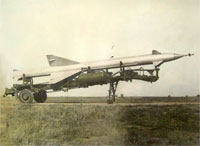
Romanian and German Troops in Bessarabia, Ukraine and Crimea, 1941-42Romanian and German Troops in Bessarabia, Ukraine and Crimea, 1941-42S-25 is a surface-to-air guided missile, the first operational SAM system in the Soviet Union. It was deployed in several rings around Moscow, starting in 1955 and became combat ready in June 1956. It was used only to defend Moscow, similar ring was planned to protect Leningrad, but was abandoned due to the appearance of the upgraded and mobile SAM S-75 (SA-2 Guideline). S-25 is short for “System 25”, and was referring to the entire system of missiles, radars, and launchers. Below is the illustration from two unpublished guides for S-25 and V-300 (SA-1 Guild) SAM, compiled in 1955 and declassified until recently. >>More
Luftwaffe Battlefield Air Interdiction in the Battle of Kursk 1943 by W. Dalecky
Romanian and German Troops in Bessarabia, Ukraine and Crimea, 1941-42Romanian and German Troops in Bessarabia, Ukraine and Crimea, 1941-42"This study attempts to show the misapplication of tactical airpower by the Luftwaffe in support of German ground forces during the Battle of Kursk in July 19^3- The analysis is based on the investigation of historical references and provides lessons learned which, might, be applied in future conflicts. The study shows that the Luftwaffe concentrated its efforts at Kursk on Close Air Support and neglected Battlefield Air Interdiction. This was primarily because Close Air Support had' proven itself so successful in German experience prior to Kursk. However, the failure of the Luftwaffe to interdict Russian reinforcements at Kursk proved to be critical and contributed to the German defeat. Air planners must realize that a correct balance between Close Air Support and Battlefield Air Interdiction is essential to the efficient use of airpower during any tactical application in support of ground forces. Neither Close Air Support nor Battlefield Air Interdiction should gain primacy in doctrine, rather, a mix of the two should be applied on a situational basis." >>More
Last Line of Defense. Nike Missile Sites in Illinois
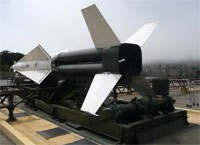
Romanian and German Troops in Bessarabia, Ukraine and Crimea, 1941-42Romanian and German Troops in Bessarabia, Ukraine and Crimea, 1941-42"In 1991, the US Army Corps of Engineers, which oversaw the construction of the nation’s Nike missile bases, asked the National Park Service, Rocky Mountain Regional office, to prepare Historic American Engineering Records (HAER) of two Nike antiaircraft missile sites in the State of Illinois. Although the missile and radar equipment had long since been removed from these bases, the Corps of Engineers – in consultation with the Illinois Historic Preservation Agency – recognized that these military installations represented a significant chapter in the history of the Cold War. Nike Missile Base C-84 near the Chicago suburb of Barrington, Illinois, was one of 23 Nile missile installations that comprised the Chicago (IL)-Gary (IN) air defense system. Nike Missile Base SL-40, near the farming community of Hecker in southern Illinois, was one of five Nike bases that formed a protective ring around the St. Louis (MO) metropolitan area." >>More
March and Fight of the German Africa Corps in 1941, Drawings by Kurt Caesar
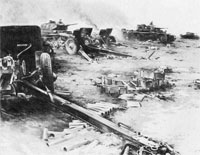
Romanian and German Troops in Bessarabia, Ukraine and Crimea, 1941-42Romanian and German Troops in Bessarabia, Ukraine and Crimea, 1941-42"On December 9th 1940 British unleashed their major offensive against Sidi el Barani, hoping to take the entire Italian and North African coast in their possession. Italy lost Cyrenaica. But the very first days of February 1941 brought a big surprise: the British stopped their offensive in the Agedabia. The vast extension of the supply routes of 1000 km long forced them to take a respite to organize the subsequent advance to Tripoli. This undeniable initial success was extensively exploited for propaganda purposes. The world held its breath. In that critical days, the first units of the German Africa Corps landed in Tripoli. Behind the scenes a tough and grim battle for the replenishment had begun. Which of the two opponents will be able to strike decisive blow first? The leadership of the DAK was entrusted to a young general who was a tactical Instructor at a well-known German military school before the war..." >>More
My Reminiscences of East Africa by von Lettow Vorbeck
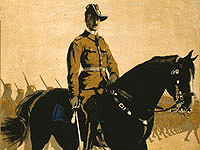
Romanian and German Troops in Bessarabia, Ukraine and Crimea, 1941-42Romanian and German Troops in Bessarabia, Ukraine and Crimea, 1941-42"In all the German colonies, though but a few decades old, a life lull of promise was discernible ere beginning to understand the national value of our colonial possessions; settlers and capital were venturing in; industries and factories were beginning to flourish. Compared with that of other nations, the colonizing process of Germany had progressed peacefully and steadily, and the inhabitants had confidence in the justice of German administration. This development had barely commenced when it was destroyed by the world war. In spite of all tangible proofs to the contrary, an unjustifiable campaign of falsehood is being conducted in order to make the world believe that the Germans lacked colonizing talent and were cruel to the natives. A small force, mainly composed of these very natives, opposed this development. Almost without any external means of coercion, even without immediate payment, this force, with its numerous native followers, faithfully followed its German leaders throughout the whole of the prolonged war against a more than hundredfold superiority. When the armistice came it was still fit to fight, and imbued with the best soldierly spirit. That is a fact which cannot be controverted, and is in itself a sufficient answer to the hostile misstatements." >>More
Proceedings of Seminar on Air Antitank Warfare
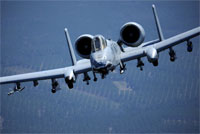
Romanian and German Troops in Bessarabia, Ukraine and Crimea, 1941-42Romanian and German Troops in Bessarabia, Ukraine and Crimea, 1941-42"On 25 - 26 May 1978 a Seminar on air antitank warfare was held at the Springfield Hilton, Springfield, Virginia. Presentations were made by Mr. John Boyd ("Patterns in Conflict"), Mr. Wayne Coloney ("Armored Warfare: a Frontline Soldier's View"), Mr. Bell (of HERO) ("Nature of the European FEBA"), and Mr. Pierre Sprey ("Countering a Blitz"). These presentations were followed by a question and answer session with former Luftwaffe Colonel Hans-Ulrich Rudel. Colonel Rudel was the most decorated German Officer of World War Two and had the distinction of destroying 519 Soviet tanks with his JU-87G Stuka equipped with two 37-mm cannons." >>More
War in Ukraine, 2014: Infographics
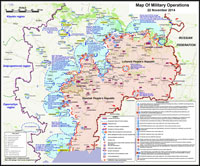
Romanian and German Troops in Bessarabia, Ukraine and Crimea, 1941-42Romanian and German Troops in Bessarabia, Ukraine and Crimea, 1941-42 War in Ukraine. "Novorossia" republics under Ukrainian Army offensive, July 5 - November 22, 2014 >>More
Duel of the Caricatures: Ukraine, Russia, Kiev, Crimea 2014
Romanian and German Troops in Bessarabia, Ukraine and Crimea, 1941-42Romanian and German Troops in Bessarabia, Ukraine and Crimea, 1941-42Ukranian artist Yury Zhuravel vs Russian artist Vitaly Podvitsky. >>More
Tactics and Techniques of Electronic Warfare by Bernard C. Nalty
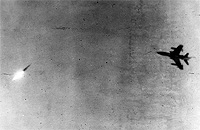
Romanian and German Troops in Bessarabia, Ukraine and Crimea, 1941-42Romanian and German Troops in Bessarabia, Ukraine and Crimea, 1941-42"Electronic Countermeasures in the Air War Against North Vietnam is one of a series of monographs on USAF tactics and techniques in Southeast Asia. Electronic countermeasures is but one aspect of the broad subject of electronic warfare, which was waged in all its complexity throughout Southeast Asia. Nevertheless, in choosing to deal with this topic, the Office of Air Force History faced a difficult security problem, for key material is so closely held that its inclusion might result in a history to which the average Air Force officer would not have access. As a result, this special intelligence was not used. Instead, various agencies involved in electronic countermeasures, having access to material not available to the historian, were invited to comment on a draft of the monograph, to ensure an essentially correct account." >>More
Conversations with a Stuka Pilot: Paul-Werner Hozzel
Romanian and German Troops in Bessarabia, Ukraine and Crimea, 1941-42Romanian and German Troops in Bessarabia, Ukraine and Crimea, 1941-42"As part of a program to evaluate the lethality of current airborne automatic cannon ammunition against threat armored vehicles, the Wayne H. Coloney Company invited former Brigadier General Paul- Werner Hozzel, German Air Force, to present some of his experiences in combat in the Second World War. General Hozzel presented his ideas and recollections in a one-day seminar at the National War College to members of the alumni association and other distinguished guests. Two days later, at the invitation of Professor R.H.S. Stolfi, Naval Postgraduate School, he gave a similar seminar to students and faculty at Monterey, California. The seminar participants and audience varied markedly and included officer students at the Naval Postgraduate School, active-duty Air Force general officers, retired Admiral Arleigh Burke, USN, and the Director of Net Assessment for the Department of Defense." >>More
The Taylor Committee Investigation of the Bay of Pigs by Jack B. Pfeiffer
Romanian and German Troops in Bessarabia, Ukraine and Crimea, 1941-42Romanian and German Troops in Bessarabia, Ukraine and Crimea, 1941-42"More than twenty years after the event, CIA personnel who were closely involved in the Bay of Pigs (BOP) operation continue to speak bitterly about the outcome. That the criticism of the Agency for its "fiasco" began even as the search for survivors from the beaches at Playa Giron and Playa Larga was underway—and continues to the present—has done nothing to mollify the feelings of those who were involved that they have taken a "bum rap" for a political decision which insured the military defeat of the anti-Castro forces the Agency had been authorized to organize and train for the overthrow of Fidel Castro." >>More
Cuba, January 1961, Paintings and Sketches
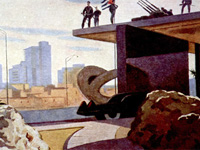
Romanian and German Troops in Bessarabia, Ukraine and Crimea, 1941-42Romanian and German Troops in Bessarabia, Ukraine and Crimea, 1941-42In January 1961, just 3 months before Bay of Pigs invasion, two Soviet artists, V. Ivanov and P. Ossovsky visited Cuba to create images of the besieged nation, anxiously awaiting the imminent US intervention. >>More
Japanese 1904-1905 War Engravings
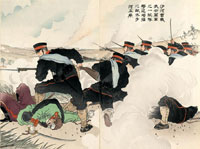
Romanian and German Troops in Bessarabia, Ukraine and Crimea, 1941-42Romanian and German Troops in Bessarabia, Ukraine and Crimea, 1941-42Russo-Japanese War engravings by Getsuzô, Kobayashi Kiyochika, Suzuki Kason, Utagawa Kokunimasa, Watanabe Nobukazu, Ikeda Terukata, Kôkyo, and unknown Japanese artists. >>More
Cryptanalysis in the German Air Force by Waldemar Werther
Romanian and German Troops in Bessarabia, Ukraine and Crimea, 1941-42Romanian and German Troops in Bessarabia, Ukraine and Crimea, 1941-42"During the period of preparation for the establishment of the intercept equipment of the Air Force in 1936, the first State employees intended for cryptanalysis (who were all of them civilians up to the outbreak of the war) were sent to the permanent intercept posts of the Army in the East for the purpose of basic training. The results of this training were unsatisfactory because the Army was reticent in releasing even the most elementary information, and furthermore, because the individuals sent lacked in most cases the necessary qualifications for their work; the personnel officials made their selections on anything but a proper basis, and appointed many persons who turned out to be completely unsuitable for the work of a cryptanalyst. The creation of a capable and successful cryptanalytic group was accomplished only in the course of the following years of tiresome work, without outside assistance, and through an internal development achieved by dropping numerous unsatisfactory elements." >>More
Hitler in Poland by Heinrich Hoffmann
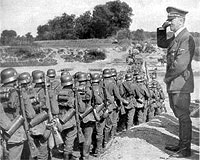
Romanian and German Troops in Bessarabia, Ukraine and Crimea, 1941-42Romanian and German Troops in Bessarabia, Ukraine and Crimea, 1941-42Official photo album, published by NSDAP after the end of the campaign in Poland, 1939. Photos and text by official Hitler's photographer, Professor Heinrich Hoffmann. >>More
Report on Rocket Power Plants Based on T-Substance by Hellmuth Walter
 Romanian and German Troops in Bessarabia, Ukraine and Crimea, 1941-42Romanian and German Troops in Bessarabia, Ukraine and Crimea, 1941-42
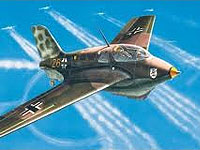
"In the search for an energy source independent of air for the propulsion of underwater craft, attention was early concentrated on T-substance. It was possible to convince the OEM [Navy High Command] very quickly of the importance of this material. In 1934, the first experiments were undertaken. A difficulty was at once presented "by the limited concentration that had "been attained. At first only 60 percent T-substance could be supplied; this amount was later increased to as much as 85 percent. Decomposition and combustion experiments conducted on the grounds of the CPVA in Kiel-Dietrichsdorf led to the first practical information as to the technical feasibility of the use of T-substance. New perspectives soon developed because a method of concentrated energy production had been found here, which was capable of many applications. The idea of using this energy for the propulsion of missiles either in guns or as rockets suggested itself and appropriate proposals, which quickly led to the construction of the first experimental devices, were made to the official quarters concerned. In January 1937, the first flight of a DVL aircraft with T-substance auxiliary propulsion took place at Alimbemuhle in the presence of Colonel Udet, who piloted the third flight. In June 1937, the first T-substance rockets were fired (Altenwalde). Then in rapid succession take-off auxiliary, main propulsion, and other rocket drives were brought out in experimental versions." >>More
Peculiarities of Russian Warfare by Erhard Raus
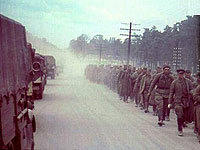
Romanian and German Troops in Bessarabia, Ukraine and Crimea, 1941-42Romanian and German Troops in Bessarabia, Ukraine and Crimea, 1941-42"PECULIARITES OF RUSSIAN WARFARE”was prepared by a committee of former German generals and general staff corps officers at the EUCOM Historical Division Interrogation Enclosure, Neustadt, Germany, in late 1947 and early 1948. The names of the committee members are not being announced at this time. All members, however, had extensive experience on the Eastern Front during the period 1941-45. The principal author[Raus], for example, commanded, in succession, a panzer division, a corps, a panzer army, and an army group." >>More
The Decryption of the Picture by Henry Lowenhaupt
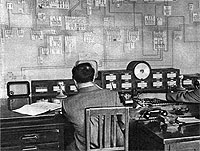
Romanian and German Troops in Bessarabia, Ukraine and Crimea, 1941-42Romanian and German Troops in Bessarabia, Ukraine and Crimea, 1941-42"One day in August 1958 Charles V. Reeves showed me a picture of the Sverdlovsk Central Dispatching Office of the Urals Electric Power System which he had found in the July issue of Ogonek, the Soviet equivalent of Look magazine (Figure 1a). He remarked that at the Boston Edison Company he had controlled electric power generation and flow in the Boston metropolitan area from just such a dispatching station." >>More
World War I Allied Propaganda Posters
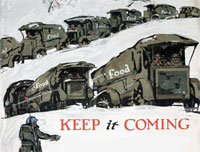
Romanian and German Troops in Bessarabia, Ukraine and Crimea, 1941-42Romanian and German Troops in Bessarabia, Ukraine and Crimea, 1941-42Collection of the French, American and Italian propaganda posters >>More
Kesselring: an Analysis of the German Commander at Anzio by Teddy D. Bitner
Romanian and German Troops in Bessarabia, Ukraine and Crimea, 1941-42Romanian and German Troops in Bessarabia, Ukraine and Crimea, 1941-42"This study attempts to analyze the decisions made by Field Marshal Albert Kesselring prior to and during the battle of Anzio in February 1944. The focus of the investigation is on Kesselring’s decision to shift Army Group reserves from the Rome area prior to the Allied amphibious assault at Anzio on 18 January 1944, then his involvement in the development and execution of the German counterattack against the Allied beachhead conducted on 16 February 1944. The investigation reveals that Kesselring, the Army Group Commander, made a proper and effective decision in committing the Army Group reserves to the German defensive line prior to the invasion, and that his involvement in the development and execution of the German counterattack at Anzio was doctrinally sound and generally effective." >>More
Revolutionary Forces in the Early Phase of the Hungarian Revolution 1956 by Zoltan Virag
Romanian and German Troops in Bessarabia, Ukraine and Crimea, 1941-42Romanian and German Troops in Bessarabia, Ukraine and Crimea, 1941-42"The aim of this thesis is to provide insight and analysis of the factors that contributed to the military success of the revolutionary forces against the Hungarian and Soviet armed and security forces during the early phase of the 1956 Hungarian Revolution 1956. The thesis in the beginning substantiates an overall comprehension of the Hungarian political, economical, and social conditions from 1953 till 1956. The presentation of this time period facilitates the understanding of the circumstances leading to the revolution break out. Furthermore, thesis examines the legal and legitimacy questions of the Soviet military intervention in the framework of the Treaty of Friendship, Cooperation and Mutual Assistance, commonly known as the Warsaw Pact." >>More
Russian-Japanese War 1904-1905 Photo Gallery by Victor Bulla
Romanian and German Troops in Bessarabia, Ukraine and Crimea, 1941-42Romanian and German Troops in Bessarabia, Ukraine and Crimea, 1941-42Victor Bulla, son of the famous official photographer of the Russian Tsar Court Karl Bulla, received independent recognition as a photographic reporter during the Russian-Japanese war 1904-05, when, as the 19-years old ensign, he became military photographer with the Siberian Reserve Brigade. He participated in the battle of the Dalin Pass and Mukden, actions at Erdagou, Zunio, Sandepu, Lanafan, Putilov Hill, in General Mishchenko’s raid and other key events of the war. Bulla's front-line reports were extensively published in the most popular illustrated magazines "Niva" (The Field), "Iskry" (Sparks) and major Russian newspapers and reprinted all over the world. Victor frequently took the duties of the medical assistant on the battlefield, and for his actions was later awarded by Silver Medal "For Courage" on the St. George's ribbon. >>More
Tanks in the Great War 1914-1918 by J.F.G.Fuller
Romanian and German Troops in Bessarabia, Ukraine and Crimea, 1941-42Romanian and German Troops in Bessarabia, Ukraine and Crimea, 1941-42"THE following work is the story of a great and unique adventure as heroic as the exploits of the Argonauts of old, and, though the time perhaps has not yet arrived wherein to judge the part played by tanks in the Great War, I feel that, whatever may be the insight and judgment of the eventual historian of the British Tank Corps, he will probably lack that essential ingredient of all true history—the witnessing of the events concerning which he relates." >>More
Finding, Fixing, and Finishing the Guideline by John Deeney IV
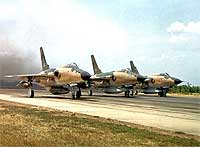
"During Operation Rolling Thunder, the United States Air Force was unprepared for the introduction of the SA-2 Guideline surface-to-air missile system into the North Vietnamese integrated air defense system (IADS). Following a series of aircraft losses in the summer of 1965, the USAF identified an emerging time critical requirement for a dedicated SAM suppression capability. This thesis will provide background for USAF air operations during Rolling Thunder. Next this thesis will use the Find, Fix, Finish, Exploit, and Analyze (F3EA) targeting methodology as an interpretive model for analyzing the creation, fielding, and tactical employment of USAF "Wild Weasel" platforms. This thesis will then analyze the structure and effectiveness of the North Vietnamese IADS, and show how mobility tactics and integration drove the requirement for the Wild Weasel platform. This thesis will discuss the initial acquisition and development of the Wild Weasel program up to and including the Wild Weasel III platform (F-105F/G), and then will examine how the operations-intelligence cycle allowed US aircrew to refine their understanding of the capabilities of the North Vietnamese IADS, and its emerging tactics. This thesis will conclude with an assessment of the Wild Weasel program during Rolling Thunder, and recommendations for future offensive counter-air planning and execution". >>More
Debriefing of Francis Gary Powers, February 1962
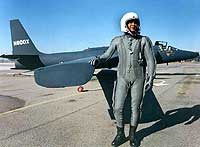
Romanian and German Troops in Bessarabia, Ukraine and Crimea, 1941-42Romanian and German Troops in Bessarabia, Ukraine and Crimea, 1941-42After his return from the Soviet captivity, Powers has undergone a most intensive debriefing by CIA interrogators, aeronautical specialists, and other experts concerned with various aspects of his mission and subsequent capture by the Soviets. From 16 tapes of the debriefings in existence, 13 were recently declassified, and allow us to learn firsthand about the intricate details of one of the most famous episode of the Cold War. >>More
The Life of Admiral Togo by Arthur Lloydtthias Dogenby Matthias Dogenby Matthias Dogen
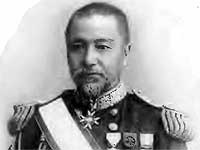
Romanian and German Troops in Bessarabia, Ukraine and Crimea, 1941-42Romanian and German Troops in Bessarabia, Ukraine and Crimea, 1941-42 "For the imperfections of the present volume I can only plead that I hope it may prove to be a first edition, and that further studies and the publication of more detailed information may enable me at some future time to complete, or at least to elaborate, the biography of a great man in whom the whole world is interested.The modest and retiring life which Admiral Togo has hitherto lived has made it difficult for the biographer to collect many picturesque incidents relating to his early years. But modesty is one of the greatest of virtues, and that he has always exhibited this virtue in so conspicuous a manner seems to be one of the elements which make the greatness of his character." >>More
Architectura Militaris Moderna by Matthias Dogen, by Matthias Dogenby Matthias Dogenby Matthias Dogen 1647
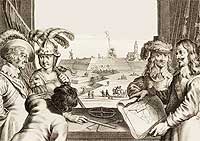
Romanian and German Troops in Bessarabia, Ukraine and Crimea, 1941-42Romanian and German Troops in Bessarabia, Ukraine and Crimea, 1941-42 Architectura Militaris Moderna by Matthias Dogen. >>More
Performance Investigation of a Jumo 004 Combustor
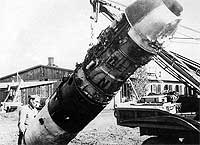
Romanian and German Troops in Bessarabia, Ukraine and Crimea, 1941-42Romanian and German Troops in Bessarabia, Ukraine and Crimea, 1941-42A German Jumo 004 combustor was investigated under conditions simulating zero-ram operation of a 24C jet-propulsion engine over ranges of altitude and engine speed to obtain the altitude oper¬ating limits and characteristics of the German combustor. The combustion efficiency, outlet-temperature distribution, and total- pressure drop were determined. A comparison of the performance of the combustor with 62-octane (AN-F-22) and JP-1 (AN-F-32) fuels was made. >>More
The Moral Condition of a Nazi Soldier by Prof. A. Jerusalemsky
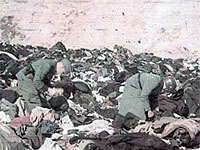
Romanian and German Troops in Bessarabia, Ukraine and Crimea, 1941-42Romanian and German Troops in Bessarabia, Ukraine and Crimea, 1941-42Soviet propaganda brochure about moral degradation of the German Army, published on September 15, 1941. >>More
Der Adler, Issue 23. November 18, 1941
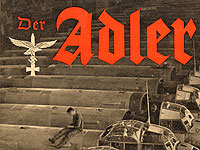
Romanian and German Troops in Bessarabia, Ukraine and Crimea, 1941-42Romanian and German Troops in Bessarabia, Ukraine and Crimea, 1941-42Official magazine of the German Air Ministry. The last number, distributed in USA before the start of the war. Typical propaganda piece: heroic deeds of the airmen, reports from the front, winners of the Iron Cross, training, adventure, Fuhrer's care, treatment of the wounded, leisure and culture, rough trench humor, some advertising. >>More
Comments on Russian Roads and Higways by Max Bork
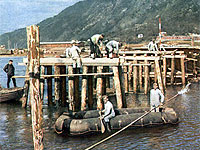
Romanian and German Troops in Bessarabia, Ukraine and Crimea, 1941-42Romanian and German Troops in Bessarabia, Ukraine and Crimea, 1941-42"Comments on Russian Railroads and Highways," was originally prepared in German under the supervision of Historical Division, USAREUR. The author, Gen. Lt. a.D. Max Bork, in 1939 and I940 was a Branch Chief in the Transportation Division of the German Army General Staff." >>More
Ju-88 Flying Operations
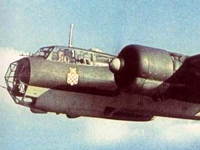
Romanian and German Troops in Bessarabia, Ukraine and Crimea, 1941-42Romanian and German Troops in Bessarabia, Ukraine and Crimea, 1941-42"Ju 88 is "one man's airplane" when speaking about flying it, as one man, the pilot, is able to use and oversee the engine and flying controls during normal flights." >>More
Romanian and German Troops in Bessarabia, Ukraine and Crimea, 1941-42
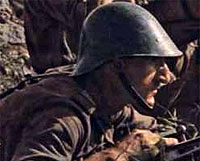
Romanian and German Troops in Bessarabia, Ukraine and Crimea, 1941-42Romanian and German Troops in Bessarabia, Ukraine and Crimea, 1941-42Extensive photo collection. Section included: "Over the Prut", "Bessarabia is Free Again", "Hot Battle for the Dnieper Crossing", "Victorious March continues through the Ukraine", "Italian Troops", "Battle for Odessa and Ochakov", "To Bug and Dnieper", "Thrust to the Sea of Azov", "Our Enemies", "Fallen General Ritter von Schobert", "The Struggle for the Crimea has begun", "Going South through the Steppe", "Through the Yaila Mountains to the South Coast", "The Struggle for the Feodosia", "Breakthrough in Kerch", "Sevastopol", "Visit of Historical Significance", "Caring for the Comrades". >>Part I, >>Part II, >>Part III
1950s Military Vehicles Pictorial Dictionary
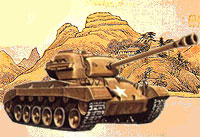
Dictionary features 101 black and white period drawings and 2000 entires. Sections included: General, Armament and Anti-tank Weapons, Power Plant, Electrical Equipment, Transmission, Chassis, Evacuation and Firefighting Equipment. >>More